Kitchen Cabinet Grades Explained: What You Need to Know
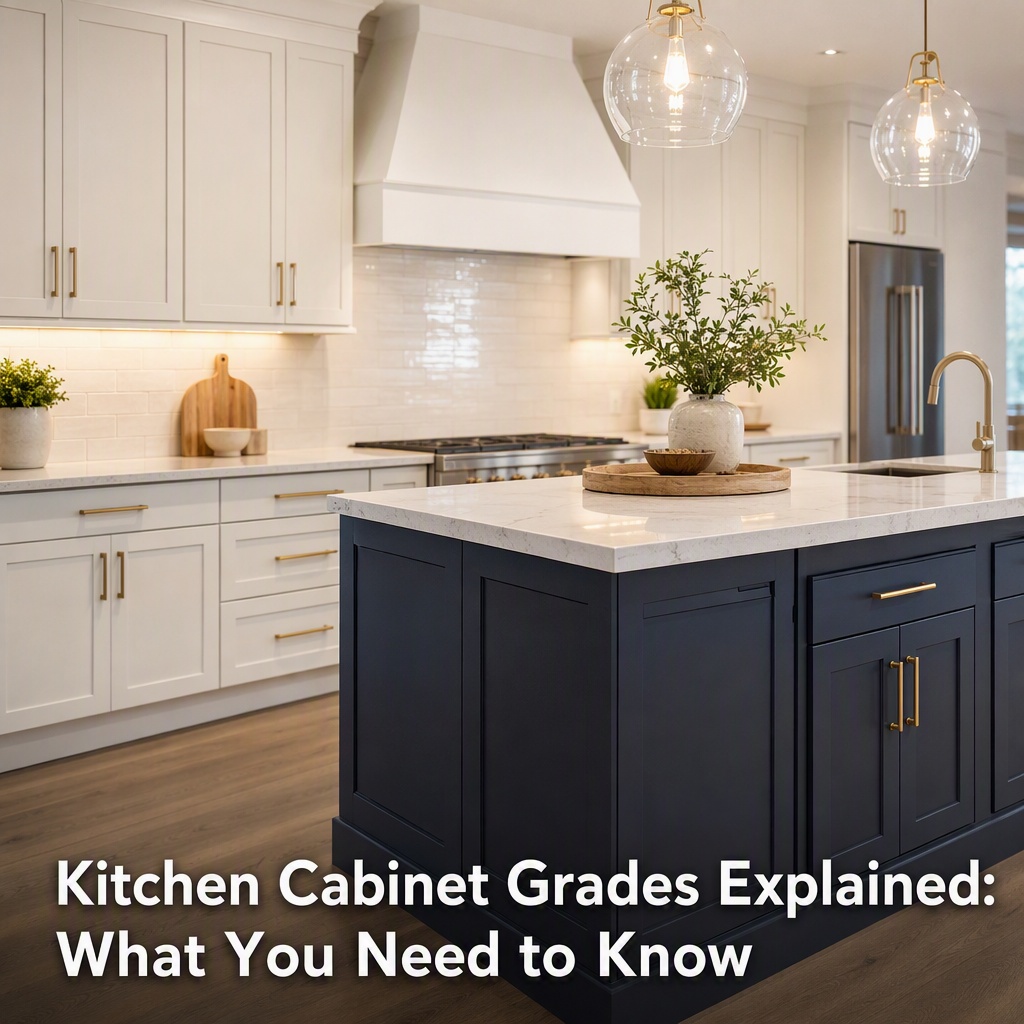
Understanding cabinet grades is one of the most practical skills you can develop before starting a kitchen remodel. Most homeowners walk into a showroom or browse online and immediately get overwhelmed by terms like “premium construction,” “solid wood,” and “professional grade” , without any clear way to compare what those phrases actually mean. The result is often overspending on features you do not need or underspending on quality that will cost you more in repairs later.
Cabinet grades are not a perfect science, but they do give you a reliable framework for evaluating what you are buying. From the materials inside the cabinet box to the type of joinery holding it together, every detail contributes to how long your cabinets will last and how well they will perform under daily use. If you are planning a kitchen remodel, understanding these grades before you shop will save you time, money, and frustration.
This guide breaks down everything you need to know about kitchen cabinet grades in plain language. You will learn how grades are classified, how to compare options side by side, and how to choose the right grade for your specific project and budget.
What Kitchen Cabinet Grades Mean
Cabinet grades are a way of categorizing kitchen cabinets based on their construction quality, materials, and manufacturing standards. They are not always assigned by a single universal authority, which is part of what makes shopping confusing. However, most industry professionals and retailers use a consistent set of criteria to separate lower-grade from higher-grade products.
How cabinet grades are classified
The most common classification system divides cabinets into three broad tiers: stock cabinets, semi-custom cabinets, and custom cabinets. Each tier reflects a different level of material quality, construction detail, and price point.
| Cabinet Grade | Construction Type | Typical Materials | Price Range |
|---|---|---|---|
| Stock | Pre-built, fixed sizes | Particleboard, MDF | Lowest |
| Semi-Custom | Modified sizing options | Plywood, MDF blend | Mid-range |
| Custom | Built to specification | Solid wood, plywood | Highest |
Beyond these tiers, cabinet construction style also plays a role. Face frame cabinets have a solid wood frame attached to the front of the cabinet box, while frameless cabinets use a full-access design with no front frame. Both styles can appear across all grade levels, but frameless cabinets are more common in higher-end European-style kitchens.
What grade labels do and do not guarantee
Grade labels give you a starting point, but they do not guarantee quality on their own. A cabinet marketed as “premium” may still use particleboard in the box construction while only featuring solid wood doors. That distinction matters enormously for long-term cabinet durability.
One reliable benchmark is the KCMA Standards certification, which stands for the Kitchen Cabinet Manufacturers Association. Cabinets that meet KCMA Standards have passed structural and finish tests that simulate years of real-world use. Always look for this certification when evaluating mid-range and higher-grade products.
Grade labels also do not account for installation quality, which can make even a well-built cabinet perform poorly if done incorrectly.
How to Compare Cabinet Grades Step by Step
Comparing cabinet grades requires looking beyond the surface finish and door style. The real quality differences are usually hidden inside the cabinet box and in the details of how components are joined together.
Check materials and box construction
The cabinet box is the structural foundation of every kitchen cabinet. It is what holds the weight of your dishes, appliances, and daily use. Box construction materials fall into three main categories: plywood, MDF (Medium Density Fiberboard), and particleboard.
- Plywood is the strongest and most moisture-resistant option for cabinet boxes
- MDF offers a smooth surface ideal for painted finishes but is heavier and less water-resistant
- Particleboard is the least expensive and least durable, prone to swelling when exposed to moisture
If you are comparing ready-to-assemble versus pre-assembled cabinet options, pay close attention to whether the box uses plywood or particleboard, since this single factor often explains significant price differences between otherwise similar-looking products.
Review door style, finishes, and hardware
Cabinet door styles range from simple flat-panel designs to raised-panel and shaker styles. The door material matters as much as the style. Solid wood doors are the most durable and can be refinished, while MDF doors painted with a factory finish are more affordable and resist warping in stable environments.
Cabinet finish quality is another key differentiator. Higher-grade cabinets typically use a catalyzed or conversion varnish finish that is harder and more resistant to scratches and moisture than standard paint or stain. Run your hand across the surface and look for consistency in sheen, color, and texture.
Cabinet hardware, including soft close hinges and drawer slides, is often where budget cabinets cut corners. Soft close hinges should feel smooth and controlled, not loose or wobbly. Full-extension drawer slides that hold weight without flexing are a sign of better-grade construction.
Compare joinery, durability, and warranty details
Joinery refers to how the parts of a cabinet are connected. Dovetail joints are the gold standard for drawer boxes because they interlock mechanically and resist pulling apart under load. Stapled or glued joints are common in lower-grade cabinets and tend to fail faster under heavy use.
Cabinet durability is directly tied to joinery quality. Ask manufacturers or retailers specifically how drawer boxes are constructed and whether the cabinet box uses dado joints or simple butt joints with staples.
- Dovetail joints: strongest, found in higher-grade cabinets
- Dado joints: solid mid-range option for box construction
- Stapled butt joints: common in stock and budget cabinets
Cabinet warranty terms reveal a lot about manufacturer confidence. A limited lifetime warranty on the cabinet box and a separate warranty on finish and hardware is standard for quality brands. Short warranties or warranties with many exclusions are a red flag.
Choosing the Right Grade for Your Project
Not every kitchen needs custom cabinets, and not every budget kitchen needs to sacrifice quality. The right grade depends on how you use your kitchen, how long you plan to stay in your home, and what your total remodel budget allows.
Best options for budget, midrange, and premium kitchens
Budget kitchens benefit most from stock cabinets with plywood box construction. Avoiding particleboard at this price point is the single most important upgrade you can make. Many wholesale suppliers offer plywood-box stock cabinets at prices that compete with big-box store particleboard options, and understanding the difference between wholesale and big-box store cabinets can help you stretch your budget further without sacrificing structural quality.

Midrange kitchens are well served by semi-custom cabinets with plywood boxes, soft close hinges, and dovetail drawer construction. This tier offers the best balance of quality and cost for most homeowners.
Premium kitchens justify custom cabinets built from solid wood with full plywood construction, premium hardware, and specialty finishes. These are built to last decades and can significantly increase home resale value.
How to match cabinet grade to usage and timeline
A rental property kitchen has different needs than a forever home. For rental or short-term use, stock cabinets with durable finishes and simple hardware make practical sense. For a primary residence where you cook daily, investing in at least mid-grade construction pays off in reduced maintenance and longer lifespan.
- Rental or flip properties: stock cabinets with plywood boxes
- Primary residence, moderate use: semi-custom with plywood and soft close hardware
- High-use family kitchen: semi-custom or custom with dovetail drawers and solid wood doors
- Luxury or forever home: full custom with premium materials throughout
Timeline also matters. Stock cabinets ship quickly, while custom cabinets can take weeks or months. If your remodel has a tight schedule, semi-custom options often offer the best compromise between quality and lead time.
Practical buying tips for homeowners and remodelers
Request physical samples before committing to any cabinet order. Photos and showroom displays rarely capture the true weight, finish texture, or construction quality of a cabinet. Hold a sample door, open a drawer, and check how the hinges feel.
Always ask for the cabinet specification sheet, which lists box material, finish type, joinery method, and hardware brand. Reputable suppliers provide this without hesitation. If a supplier cannot or will not share specifications, that is a warning sign worth taking seriously.
Compare cabinet cost per linear foot rather than per unit. This gives you a more accurate picture of total project cost and makes it easier to compare quotes from different suppliers.
Common Problems and Troubleshooting
Even well-researched purchases can run into problems. Knowing what to watch for during shopping, delivery, and installation helps you catch issues before they become expensive mistakes.
Spotting misleading marketing claims
“All-wood construction” is one of the most misused phrases in cabinet marketing. It technically includes MDF and particleboard, since both are wood-based products. What you actually want is solid wood or plywood construction, and you need to ask specifically for those terms.
Watch for vague claims like “premium grade” or “professional quality” without supporting specifications. Legitimate quality claims are backed by KCMA Standards certification, specific material callouts, and verifiable warranty terms. If you are unsure whether a supplier’s quality claims hold up, reading an honest assessment of wholesale cabinet quality can give you a useful baseline for comparison.
Fixing fit, finish, and installation issues
Minor finish imperfections like small chips or uneven sheen can often be addressed with touch-up kits provided by the manufacturer. More significant issues like warped doors or misaligned hinges usually indicate a manufacturing defect and should be reported immediately for replacement.
Cabinet installation problems are common even with quality products. Out-of-level walls and floors cause doors to hang unevenly and drawers to stick. A skilled installer will shim and level each cabinet before securing it, ensuring proper alignment throughout the run.
- Uneven door gaps: adjust hinge screws or re-level the cabinet
- Drawer sticking: check slide alignment and tighten mounting screws
- Finish peeling near sink: likely moisture exposure, reseal edges and improve ventilation
When to repair, replace, or upgrade
Cabinet boxes in good structural condition with damaged doors or hardware are strong candidates for refacing rather than full replacement. New cabinet door styles, wood veneer panels, and updated hardware can transform the look of a kitchen at a fraction of full replacement cost.
Replace cabinets when the box itself is compromised , swollen particleboard, broken joints, or structural failure that cannot be repaired. Upgrading makes sense when your current cabinets no longer meet your storage needs or when a full kitchen remodel is already underway.
Conclusion
Cabinet grades give you a practical framework for making smarter purchasing decisions. The key is looking past marketing language and focusing on the specifics: box material, joinery type, finish quality, hardware performance, and warranty terms. Whether you are working with a tight budget or planning a high-end renovation, matching the right grade to your actual needs will always deliver better results than simply buying the most expensive option available.
FAQ
What is the difference between stock, semi-custom, and custom cabinets?
Stock cabinets are pre-built in fixed sizes and are the most affordable option. Semi-custom cabinets offer more sizing flexibility and finish options at a moderate price increase. Custom cabinets are built entirely to your specifications using premium materials, offering the highest quality and the longest lead times.
Are higher cabinet grades always worth the extra cost?
Not always. For short-term use or rental properties, mid-grade stock cabinets with plywood boxes often provide the best value. Higher grades make the most sense for primary residences with heavy daily use, where the investment in cabinet durability pays off over many years.
How can I tell if a cabinet is well made?
Check the box material , plywood is better than particleboard. Open and close drawers to feel the slide quality. Look for dovetail joints on drawer boxes. Ask for the specification sheet and verify KCMA Standards certification. A well-made cabinet feels solid, operates smoothly, and comes with clear, comprehensive warranty documentation.